|
 

|
| | Electrical specifications
| Model |
DPF5-3V |
DPF5-4V |
DPF5-6V
|
| Operating Frequency band, MHz |
140-174
|
| Insertion loss (adjustable) not more, dB |
1 |
1 |
1,5
|
| Frequency separation TX/RX (min), MHz |
5 |
4 |
2
|
| Impedance, Ohm |
50
|
| Isolation, not less, dB |
35/70 |
55 |
63
|
| VSWR, not more than |
1,5
|
| Input power, not more, W |
not more than 300
|
| Temperature Range, В°C |
from -30 to +60
|
| Cavity electrical length |
1/4О»
|
|
|
Mechanical specifications
| Model |
DPF5-3V |
DPF5-4V |
DPF5-6V
|
| Diameter, mm (ins.) |
128 (5")
|
| Weight, kg |
6,5 |
8,45 |
12,35
|
| Connector |
N-female
|
| Mount to 19-inch rack |
yes
|
| Length/Width/Depth, mm |
800x480x138 |
800x480x265
|
| |
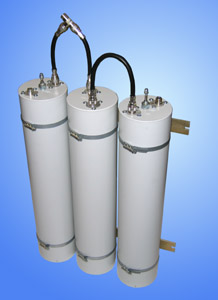
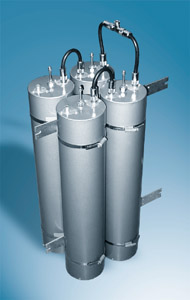
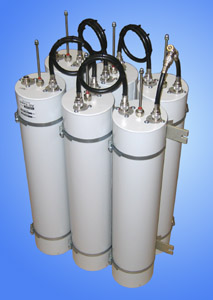
It is more effective to use bandpass duplexers, which cavities are tuned to pass receiver frequencies (in receiver circuit) and transmitter frequencies (in transmitter circuit), instead of band pass-reject duplexers at considerable receiving and transmission frequency separation.
Having higher filtration capability, duplexer DPF5-4(6)V will handle out-of-band emission attenuation better. These duplexers classical application is two militia radio stations 148 and 172 MHz combination.
In the last case triple-cavity duplexer DPF5-3V is applicable.
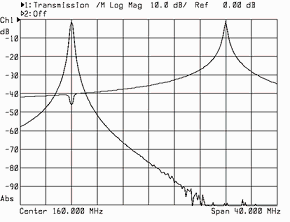
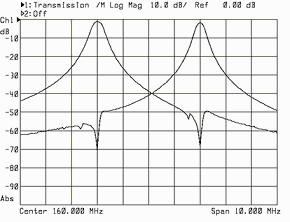
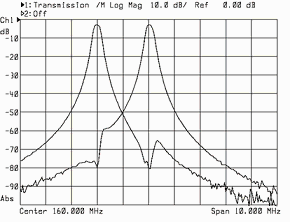
Typical duplexers response curves
DPF5-3V
|
DPF5-4V
|
DPF5-6V
|
|
The information provided on this page is not an official offer.
To verify actual parameters contact the sales department before ordering.
|
|